An inheritance dispute documentation checklist is a curated collection of legal, financial, and relational evidence designed to support or defend claims in NSW estate disputes. Under the Succession Act 2006 (NSW), sections 57, 58, 59, and 60(2) set out who can claim, what they must prove, and how long they have to act. Getting your documents right from the start is the single biggest factor separating successful claims from failed ones. Simons George Legal works with families across Sydney to build these evidence files before disputes escalate to the NSW Supreme Court.
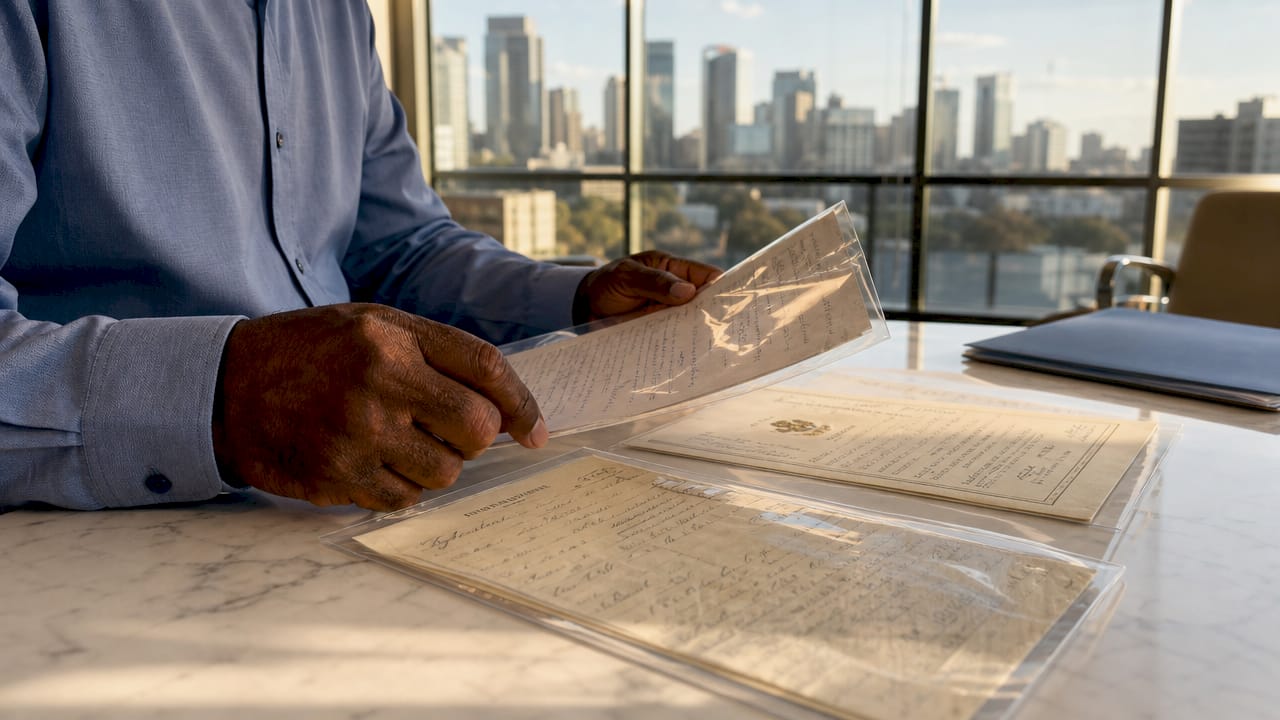
1. What core legal documents belong in your inheritance dispute documentation checklist
The foundation of any estate dispute rests on documents that establish identity, testamentary intentions, and the legal basis of your claim. Without these, no other evidence carries weight.
- Death certificate. The official proof of death issued by the NSW Registry of Births, Deaths and Marriages. Every claim starts here.
- Last valid will and testament. Obtain a certified copy from the executor or the NSW Supreme Court probate registry. Include any earlier wills if you intend to challenge the validity of the most recent one.
- Probate grant or letters of administration. Probate must be obtained before assets are distributed. Under section 93 of the Probate and Administration Act 1898 (NSW), executors who delay distribution when notified of a claim are protected from personal liability.
- Affidavits confirming claimant eligibility. These sworn statements must address your status as an eligible person under section 57. Three of the six eligible categories face an additional “factors warranting” test under section 60(3).
- Prior family provision orders or court records. If any previous claim was made against the estate or by the same parties, those records are directly relevant to the court’s assessment.
The NSW Supreme Court applies strict evidentiary standards. A document that is unsigned, uncertified, or missing a date can be excluded entirely.
2. What financial documents support a family provision claim or defence
Financial evidence is what the court uses to weigh the claimant’s need against the estate’s capacity to provide. Vague claims about hardship without supporting records rarely succeed.
- Bank statements. Provide at least 12 months of statements for both the claimant and, where accessible, the deceased. These show income, expenses, and patterns of financial support.
- Records of financial contributions. Receipts, bank transfers, or statutory declarations showing money or labour contributed to the deceased’s household, business, or property.
- Asset valuations and estate inventory. Independent valuations of real property, shares, vehicles, and business interests. The executor should have prepared an inventory; request a copy.
- Tax returns. The deceased’s tax returns for the last three to five years establish income history and asset ownership. Your own returns demonstrate current financial need.
- Superannuation details. Superannuation does not automatically form part of the estate. Confirm the fund trustee’s decision on beneficiary nominations separately.
- Evidence of debts and liabilities. Mortgages, personal loans, and outstanding bills reduce the net estate value the court considers available for provision.
Pro Tip: Request the estate inventory from the executor in writing as early as possible. Executors are obliged to account for assets, and a written request creates a paper trail if they delay.
The strongest inheritance dispute evidence combines objective financial records with clear documentation of the claimant’s relationship to the deceased. Subjective statements alone consistently fall short in NSW courts.
3. How to document relationship factors under section 60(2) of the Succession Act 2006 (NSW)
The court considers 16 factors under section 60(2) when deciding whether adequate provision was made for a claimant. Relationship evidence addresses the most contested of these factors directly.
- Photographs and correspondence. Dated photographs, letters, cards, and emails showing the nature and duration of your relationship with the deceased. Digital messages with timestamps are acceptable.
- Affidavits describing domestic arrangements. Sworn statements from the claimant and supporting witnesses outlining shared living arrangements, care provided, or financial interdependency.
- Records of attendance at significant events. Invitations, programmes, or photographs from family milestones such as birthdays, funerals, and medical appointments. These counter arguments that the relationship was distant.
- Evidence of the deceased’s expressed intentions. Statements made by the deceased to third parties about their wishes or their relationship with the claimant. These can be captured in affidavits from friends, neighbours, or professionals.
- Proof of financial responsibility or dependency. Receipts, Centrelink records, or medical invoices showing the claimant depended on the deceased, or vice versa.
Evidence such as photographs, letters, financial support proofs, and statements made by the deceased to third parties all contribute to establishing a claimant’s eligibility. These items help satisfy the “factors warranting” requirement for former spouses, grandchildren, and others under the relevant section 57 categories.
Objective, documented proof is far more persuasive than personal accounts alone. Courts treat unsubstantiated narrative as a weak foundation for a claim, regardless of how genuine the relationship was.
4. What procedural documents and timelines must you track
Missing a procedural deadline can end a valid claim before it is heard. NSW law is strict on this point.
| Document or step | Deadline or requirement |
|---|---|
| File Summons and affidavit in Supreme Court | Within 12 months of death per section 58 |
| Name executor as respondent in Summons | Required at filing to initiate proceedings |
| Written correspondence with executor | Ongoing; retain all letters and emails |
| Mediation or dispute resolution records | Required before most matters proceed to hearing |
| Notices of probate and estate administration | Obtain copies as issued; track distribution steps |
A family provision claim commences by filing a Summons and supporting affidavit in the NSW Supreme Court, naming the executor as respondent. This step stops the 12-month limitation clock and triggers the dispute resolution process.
Pro Tip: Set calendar reminders at the six-month and ten-month marks after the date of death. Waiting until month eleven to gather documents creates avoidable pressure and increases the risk of errors in affidavits.
Courts may allow extensions where “sufficient cause” is shown under section 58(2), but extensions are not guaranteed. Early engagement with a wills and estates lawyer experienced in the Succession List significantly reduces the risk of a procedural misstep destroying an otherwise valid claim.
5. How to organise your estate dispute documents for use in proceedings
Good organisation does not just save time. It signals to the court and opposing parties that your claim is prepared and credible.
- Create labelled folders by evidence category. Use four categories: Legal (wills, probate, affidavits), Financial (bank records, valuations, tax returns), Relational (photographs, correspondence, witness statements), and Procedural (court filings, correspondence with executor, mediation records).
- Separate originals from certified copies. Courts require certified copies for filing. Keep originals in a secure location and never submit them unless specifically directed.
- Prepare a chronological timeline. A one-page summary of key dates, from the deceased’s death through to current proceedings, helps your lawyer and the court follow the factual narrative quickly.
- Use a running checklist to track completeness. Mark each item as gathered, certified, or outstanding. Review the checklist at every stage of proceedings to catch gaps before they become problems.
- Store digital copies securely. Scan all documents and store them in a password-protected folder or a secure cloud service. Physical documents can be lost, damaged, or disputed.
A well-organised inheritance dispute resolution file also supports mediation. Parties who arrive at mediation with complete, organised evidence are better placed to negotiate a settlement without going to a full hearing.
Key takeaways
A complete inheritance dispute documentation checklist, built around NSW’s Succession Act 2006 requirements, is the most reliable way to protect your claim and meet Supreme Court evidentiary standards.
| Point | Details |
|---|---|
| Start with core legal documents | Death certificate, will, probate grant, and eligibility affidavits form the non-negotiable foundation. |
| Financial records decide provision | Bank statements, valuations, and tax returns give the court objective data on need and estate capacity. |
| Relationship evidence must be objective | Photographs, correspondence, and third-party affidavits outperform personal accounts in satisfying section 60(2). |
| The 12-month deadline is firm | File your Summons in the NSW Supreme Court within 12 months of death or risk losing your right to claim. |
| Organisation strengthens your position | Labelled folders, certified copies, and a chronological timeline make your case easier to run and harder to challenge. |
What I have learned about documentation in inheritance disputes
The documents people forget are the ones that decide cases
After working through contested estate matters in NSW, the pattern I see most often is this: families spend months gathering wills and bank statements, then arrive at mediation with almost nothing to show the nature of the actual relationship. That gap is where claims collapse.
Section 57 eligibility is the entry ticket. Section 60(2) is where the real contest happens. I have seen technically eligible claimants receive nothing because they could not produce a single piece of objective evidence showing what their relationship with the deceased actually looked like day to day. A handful of dated photographs and two or three witness affidavits would have changed the outcome.
The other mistake I see regularly is treating the 12-month deadline as a soft target. It is not. Courts do grant extensions, but the threshold for “sufficient cause” is higher than most people expect. Rushing to file a Summons without proper affidavits is also dangerous. Rushed affidavits contain omissions that opposing counsel will exploit.
My honest advice: start building your evidence file the week after the funeral, not the month before the deadline. The families who do this consistently reach better outcomes, whether at mediation or in court. Good documentation does not just win cases. It often prevents them from going to court at all.
— George
Funding your legal matter — no win, no fee
Simons George Legal offers No Win, No Fee arrangements for eligible inheritance dispute cases. This removes the upfront cost barrier that stops many people with legitimate claims from getting proper legal advice.
Eligibility is assessed during a complimentary 30-minute consultation. Simons George Legal reviews your circumstances, the strength of your documentation, and the likely merits of your claim before recommending a costs arrangement. You will not be left guessing about fees before you commit.
If you have a genuine claim but are concerned about legal costs, book a free case assessment with Simons George Legal today.
No Win, No Fee arrangements are subject to case eligibility and a written costs agreement. Liability limited by a scheme approved under Professional Standards Legislation.
Simons George Legal: practical support for inheritance disputes
Simons George Legal is a Bondi-based wills and estates practice that handles the full range of inheritance dispute matters across Sydney, from family provision claims to complex estate litigation.

The firm helps clients build complete evidence files, prepare affidavits that meet NSW Supreme Court standards, and manage every procedural step from filing through to resolution. Whether your matter settles at mediation or proceeds to a hearing, Simons George Legal keeps your documentation tight and your strategy clear. For specialist advice on wills and inheritance law in NSW, contact the firm to arrange your complimentary consultation.
FAQ
What documents do I need to contest a will in NSW?
You need the death certificate, the last valid will, probate documents, financial records, and affidavits establishing your eligibility under section 57 of the Succession Act 2006 (NSW). Relationship evidence such as photographs and correspondence is also required for certain eligible person categories.
How long do I have to file an inheritance dispute claim in NSW?
A family provision claim must be filed within 12 months of the deceased’s death under section 58 of the Succession Act 2006 (NSW). The court may grant an extension if sufficient cause is shown, but extensions are not guaranteed.
What is the “factors warranting” test in NSW inheritance disputes?
The “factors warranting” test under section 60(3) applies to three of the six eligible person categories under section 57. It requires objective evidence of the claimant’s relationship and entitlement, going beyond a simple family connection.
Does superannuation form part of the estate in NSW?
Superannuation does not automatically form part of a deceased estate in NSW. The fund trustee decides how to distribute it based on binding or non-binding beneficiary nominations, so it must be addressed separately from the estate.
Can I resolve an inheritance dispute without going to court?
Most NSW inheritance disputes are resolved through mediation before reaching a full hearing. Complete, well-organised documentation significantly improves your position at mediation and often leads to earlier settlement.