An estate lawyer in NSW is a legal professional who specialises in wills, estate planning, and the administration of deceased estates to protect clients’ assets and their rightful distribution. More formally known as a wills and estates solicitor, this practitioner operates within a specific body of NSW legislation including the Succession Act 2006 and the Power of Attorney Act 2003. Whether you are planning your estate, managing a loved one’s affairs after death, or facing a contested inheritance, understanding what these lawyers do is the first step toward protecting what matters most.
What is the estate lawyer role in NSW?
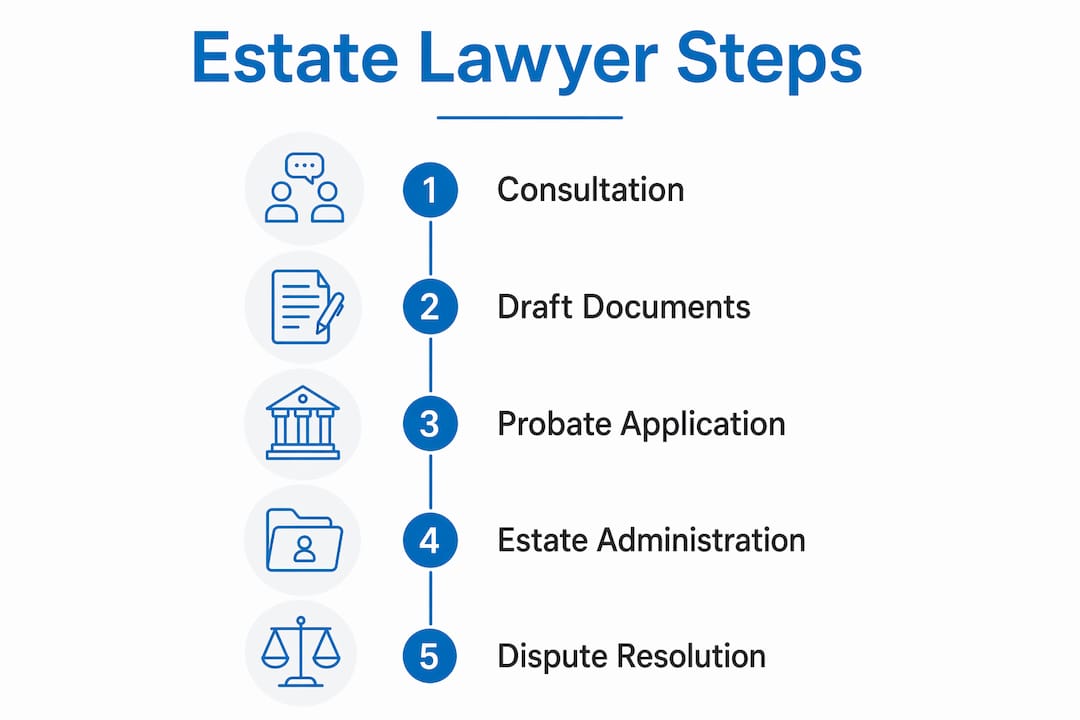
An estate lawyer in NSW performs three core functions: drafting legally valid estate planning documents, guiding executors through probate and estate administration, and representing clients in inheritance disputes. These responsibilities span the entire lifecycle of an estate, from the moment a client first considers writing a will to the final distribution of assets to beneficiaries. The role is far broader than most people expect, and the consequences of not engaging one can be severe.
Estate planning lawyers help clients avoid probate delays and legal conflicts through careful drafting and regular plan reviews in light of life changes. This means a single poorly worded clause in a will can trigger years of litigation and tens of thousands of dollars in legal costs. Getting the documents right from the start is always cheaper than fixing them later.

What do estate lawyers do during estate planning in NSW?
Estate planning is where most clients first engage an estate lawyer, and the scope of work goes well beyond writing a will. A thorough estate plan in NSW typically involves several interconnected documents and legal strategies.
- Will drafting: A lawyer drafts a will that reflects your specific wishes, accounts for your family structure, and satisfies the formal requirements of the Succession Act 2006. Drafting wills with legal expertise helps prevent disputes and ensures complex family situations are properly managed with testamentary trusts.
- Enduring power of attorney: Under NSW’s Power of Attorney Act 2003, a lawyer can appoint a trusted person to make legal and financial decisions on your behalf if you lose capacity. Without this document, your family may need to apply to the NSW Civil and Administrative Tribunal (NCAT) for a financial management order, which is costly and time-consuming.
- Enduring guardianship: This document appoints someone to make personal and lifestyle decisions, including medical treatment choices, if you cannot make them yourself.
- Testamentary trusts: Lawyers advise on embedding trusts within wills to protect inheritances for minor children, beneficiaries with disabilities, or family members in financially vulnerable situations.
- Tax and superannuation advice: An estate lawyer coordinates with financial advisers to address capital gains tax implications and superannuation death benefit nominations.
Initial estate lawyer consultations in NSW generally last 30 minutes to assess client needs and discuss the full scope of documentation required. That half-hour is often enough to identify gaps in an existing plan that could otherwise cause significant problems.
Pro Tip: Bring a list of your assets, liabilities, and intended beneficiaries to your first consultation. The more information your lawyer has upfront, the more targeted and cost-effective the advice will be.
How do estate lawyers assist with probate and estate administration in NSW?
When someone dies, their estate does not distribute itself. An estate lawyer guides executors through a structured legal process that can take months and involves multiple obligations under NSW law.
The core steps an estate lawyer manages on behalf of an executor include:
- Applying for probate or letters of administration: Probate validates a will, appoints an executor, and provides a legal framework for estate administration under NSW Supreme Court supervision. Letters of administration are required when there is no valid will.
- Valuing and securing estate assets: The lawyer assists in preparing an inventory of assets and liabilities, including real property, bank accounts, shares, and personal effects.
- Notifying beneficiaries and creditors: NSW law requires formal notification to all interested parties before distribution can occur.
- Paying debts and taxes: The estate must settle outstanding debts, including any tax obligations, before assets pass to beneficiaries.
- Distributing the estate: The lawyer prepares the documentation to transfer assets to beneficiaries in accordance with the will or intestacy rules.
For a clear picture of how long this process takes, the NSW probate timeline explains common delays and what executors can do to minimise them.
Fees for this work are regulated. NSW solicitors’ fees for probate-related work are linked to estate value and require written cost agreements. This protects executors and beneficiaries from unexpected charges. Executors who want to avoid managing this process personally can appoint the NSW Trustee and Guardian to act as executor, which is a practical option in complex or high-conflict estates.
Executors are also entitled to seek compensation. Executors may apply to the NSW Supreme Court for reasonable commission for their effort, but it is not automatic and requires evidence. An experienced estate lawyer facilitates this process effectively.
Pro Tip: Keep a detailed record of every hour you spend administering an estate. If you later apply for executor’s commission, documented time records are your strongest evidence.
| Stage | What the estate lawyer does |
|---|---|
| Probate application | Prepares and files court documents, drafts executor’s affidavit |
| Asset inventory | Identifies and values all estate assets and liabilities |
| Creditor notification | Issues formal notices and manages debt settlement |
| Distribution | Prepares transfer documents and releases assets to beneficiaries |
What role do estate lawyers play in resolving estate disputes in NSW?
Estate disputes are more common than most families expect, and they are rarely straightforward. An estate lawyer’s role in contested matters involves both legal strategy and careful management of evidence.
- Contested wills: A lawyer assesses whether a will is valid by examining the testator’s capacity at the time of signing, the presence of undue influence, and whether formal execution requirements were met.
- Family provision claims: Under the Succession Act 2006, eligible persons including spouses, children, and some former partners can apply to the NSW Supreme Court for a larger share of an estate. A lawyer advises on eligibility, prospects, and the likely costs of proceeding.
- Evaluating evidence: Estate lawyers assess testamentary capacity and undue influence using medical records and draft testimony to protect beneficiaries and uphold wills. This is specialised work that general practitioners rarely handle well.
- Negotiation and mediation: Most contested estate matters in NSW settle before trial. A skilled lawyer identifies the realistic settlement range early and steers negotiations toward resolution without unnecessary litigation costs.
“Experts highlight estate lawyers’ role in efficiently resolving will contests by preparing and analysing key evidence while balancing beneficiary interests.” — lawoftheday.com
If you are considering contesting a will in NSW, understanding your eligibility and the time limits that apply is critical before taking any steps. Acting too late can extinguish a valid claim entirely.
How do estate lawyers advise on non-probate assets and complex planning in NSW?
One of the most overlooked aspects of estate lawyer duties in NSW is advising on assets that do not pass through a will at all. Many clients are surprised to learn that a significant portion of their wealth may fall outside their estate entirely.
Non-probate assets like joint tenancies or superannuation death benefits do not pass automatically under a will and require specific legal nominations. This means your carefully drafted will may have no effect on your superannuation balance, which is often the largest single asset a person owns. An estate lawyer coordinates these nominations with your overall estate plan to prevent unintended outcomes.
| Asset type | Passes through will? | Lawyer’s role |
|---|---|---|
| Real property (sole ownership) | Yes | Included in estate and distributed per will |
| Joint tenancy property | No | Passes by survivorship; lawyer advises on restructuring |
| Superannuation | No | Lawyer coordinates binding death benefit nominations |
| Life insurance (estate as beneficiary) | Yes | Included in estate |
| Life insurance (nominated beneficiary) | No | Passes directly; lawyer reviews nomination currency |
For beneficiaries with disabilities or complex needs, a lawyer can establish a special needs trust within the will to protect government entitlements while still providing for the beneficiary. Standard direct bequests can inadvertently disqualify a person from the NDIS or Centrelink support they depend on.
Pro Tip: Review your superannuation death benefit nominations every two years or after any major life event such as marriage, separation, or the birth of a child. Lapsed nominations can mean your super is distributed in ways you never intended.
What practical steps should you take when engaging an estate lawyer in NSW?
Choosing the right estate lawyer matters as much as choosing to engage one at all. Here is what to expect and what to look for.
- Verify specialisation: Not every solicitor practises wills and estates. Look for a lawyer whose practice focuses specifically on this area, not one who handles it occasionally alongside conveyancing or family law.
- Understand cost structures: Estate lawyers’ fees can be hourly, fixed, or regulated scales based on estate value, and NSW law mandates written cost disclosure before work begins. Ask for a costs agreement before signing anything.
- Ask the right questions: Before committing, ask how many contested estate matters the lawyer has handled, whether they have experience with testamentary trusts, and how they communicate with clients throughout the process.
- Use the free consultation: Many NSW estate lawyers, including Simons George Legal, offer a complimentary initial consultation. Use this time to assess whether the lawyer listens carefully, explains things clearly, and gives you a realistic picture of your situation.
- Check for legal aid options: Community Legal Centres across NSW provide free advice for people who cannot afford private legal fees. The Law Society of NSW referral service can also connect you with accredited specialists.
Funding your legal matter: no win, no fee
Simons George Legal offers No Win, No Fee arrangements for eligible estate dispute matters, meaning you do not pay legal fees unless your case succeeds. Eligibility is assessed during a free initial consultation, which removes the financial barrier that stops many people from pursuing a legitimate claim.
This arrangement is particularly relevant for family provision claims and contested will matters, where the merits of a case are often clear but the upfront cost of litigation feels prohibitive. If your claim has genuine prospects, cost should not be the reason you walk away from what you are entitled to.
Book a free case assessment with Simons George Legal to find out whether your matter qualifies.
No Win, No Fee arrangements are subject to case eligibility and a written costs agreement. Liability limited by a scheme approved under Professional Standards Legislation.
Key takeaways
An estate lawyer in NSW covers the full spectrum from will drafting and powers of attorney through to probate administration, dispute resolution, and non-probate asset coordination, making specialist legal advice the single most effective way to protect an estate.
| Point | Details |
|---|---|
| Core role defined | Estate lawyers draft wills, manage probate, and resolve disputes under NSW law. |
| Non-probate assets matter | Superannuation and joint tenancies fall outside a will and need separate legal nominations. |
| Regulated fees apply | NSW law requires written cost agreements linked to estate value for probate work. |
| Disputes are resolvable | Most contested estate matters settle before trial with skilled legal negotiation. |
| Review plans regularly | Life changes such as marriage or separation require estate plan updates to remain effective. |
Why estate lawyers are worth more than most people realise
I have seen clients arrive at our office with wills they drafted themselves online, convinced they had saved money. In almost every case, the document had at least one flaw that would have caused real problems: a clause that inadvertently excluded a child, a superannuation nomination that had lapsed years earlier, or an executor appointment with no backup named. The cost of fixing these issues after death is always far greater than the cost of getting them right the first time.
The other misconception I encounter constantly is that estate lawyers are only needed when someone dies. The planning work is where the real value sits. A well-structured estate plan, reviewed every few years, is the difference between a straightforward administration and a contested mess that drains the estate and fractures the family.
People also underestimate how much an estate lawyer does during probate. Executors often have no idea they are personally liable for mistakes made during administration. Guiding an executor through their legal duties, protecting them from personal liability, and helping them claim fair compensation for their effort is work that genuinely changes outcomes for families.
If you are putting off getting your estate in order because it feels complicated or expensive, I would encourage you to use the free consultation that Simons George Legal offers. Thirty minutes is usually enough to understand exactly where you stand and what needs to be done.
— George
How Simons George Legal can help with your estate

Simons George Legal is a Bondi-based wills and estates practice serving clients across Sydney. The firm handles will drafting and estate planning, probate and estate administration, and complex estate litigation including contested wills and family provision claims. Every client receives clear advice, a written costs agreement, and a strategy tailored to their specific family and financial circumstances. New clients are offered a complimentary 30-minute consultation to assess their situation and identify the most practical next steps. Contact Simons George Legal today to get started.
FAQ
What does an estate lawyer do in NSW?
An estate lawyer in NSW drafts wills and estate planning documents, guides executors through probate and estate administration, and represents clients in contested will matters and family provision claims under the Succession Act 2006.
How much does an estate lawyer cost in NSW?
Estate lawyer fees in NSW can be hourly, fixed, or calculated on regulated scales based on estate value. NSW law requires solicitors to provide a written costs agreement before commencing work, so you always know what you are agreeing to pay.
Do I need an estate lawyer to make a will in NSW?
You are not legally required to use a lawyer to make a will in NSW, but a lawyer ensures the document is formally valid, reflects your intentions accurately, and reduces the risk of future disputes or an invalid will.
What is a family provision claim in NSW?
A family provision claim is an application to the NSW Supreme Court by an eligible person, such as a spouse or child, seeking a greater share of an estate than the will provides. An estate lawyer advises on eligibility, time limits, and realistic prospects before you commit to proceedings.
Can an executor be compensated in NSW?
Yes. Executors may apply to the NSW Supreme Court for reasonable commission for administering an estate, but it is not automatic and requires evidence of the work performed. An estate lawyer helps executors prepare and present that evidence effectively.