Can a verbal promise override a will in NSW farm inheritance?
A handshake promise to leave the family farm can legally override a written will in New South Wales. The legal mechanism is equitable estoppel, and courts have enforced it in farm succession disputes where the evidence is strong enough. The 2024 High Court decision in Kramer v Stone confirmed this plainly: a farm worker who relied on a promise of inheritance for many years, forgoing better-paid work, was entitled to the farm even though the will said otherwise.
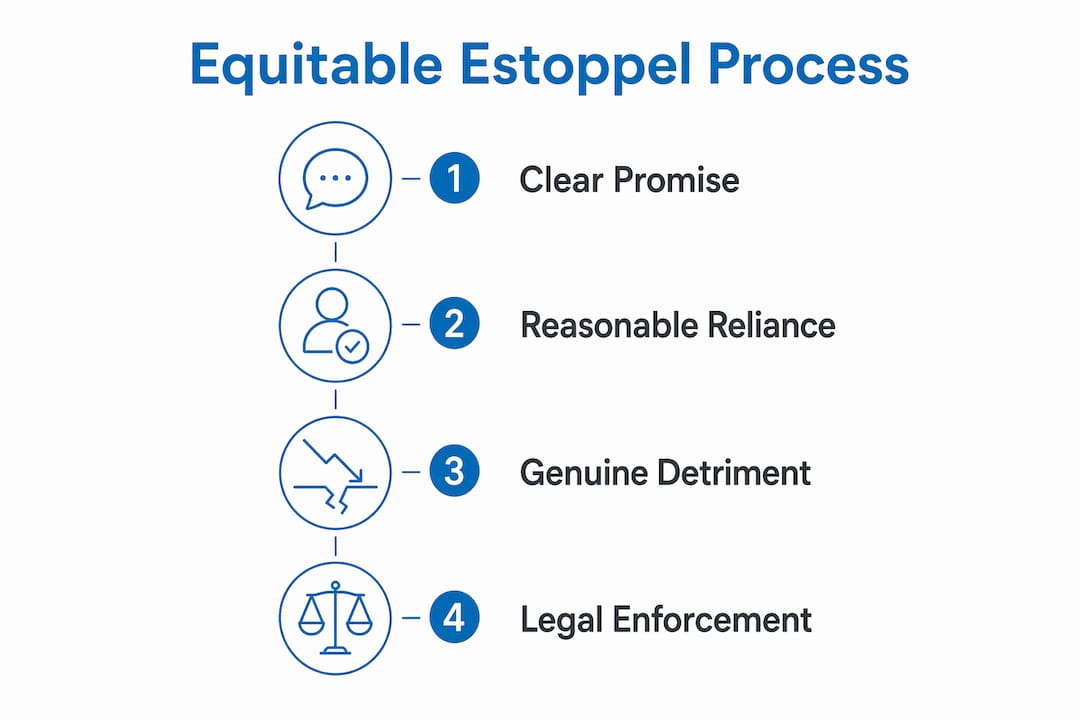
For a verbal promise to succeed against a will, three things must be present:
- A clear and unequivocal promise — not a vague aspiration, but a specific commitment that the farm would pass to you
- Reasonable reliance — you acted on that promise in a way a reasonable person would, such as staying on the farm instead of pursuing other opportunities
- Detriment — you are genuinely worse off because you relied on the promise, and it would be unconscionable for the estate to walk away from it
The hierarchy under NSW inheritance laws places a valid, executed will at the top. Equitable estoppel does not rewrite the will; it sits alongside it and can compel the estate to hold property on trust for the person who was promised it. That is a meaningful distinction. You are not arguing the will is invalid — you are arguing the estate cannot, in good conscience, enforce it against you.
Kronenberg v Macaulay is the cautionary counterpoint. There, the court rejected the estoppel claim because the son had already committed to the farm before the promise was made, and had received financial benefits along the way. No causal link, no claim.
Table of Contents
- What equitable estoppel actually means for farm families
- What Kronenberg v Macaulay teaches about handshake promises
- Why courts reject verbal inheritance promises in farm cases
- Legal tools that protect farm succession plans before disputes arise
- How Simons George Legal supports NSW families in farm inheritance disputes
- Aboriginal and Torres Strait Islander customary laws and farm inheritance in NSW
- Funding your legal matter — no win, no fee
- Simons George Legal: clear advice for contested farm inheritance
- Key takeaways
- FAQ
What equitable estoppel actually means for farm families
Equitable estoppel is the court’s tool for preventing unconscionable conduct. When someone makes a promise, knows you will rely on it, watches you rely on it, and then their estate refuses to honour it, the court can step in. The doctrine does not require a written contract. It requires proof that the promise was real, the reliance was real, and the harm is real.
Under NSW law, estoppel by encouragement requires four elements to be satisfied:
- A clear and unequivocal promise or representation
- A reasonable expectation by the promisor that you would rely on it
- Actual reliance on your part
- Detriment you would suffer if the promise is not fulfilled
Kramer v Stone removed one historical hurdle: the High Court confirmed the promisor does not need to have had actual knowledge of your specific acts of reliance after the promise was made. Constructive knowledge — that a reasonable person in their position would have expected you to rely on it — is enough. That makes these claims somewhat more accessible than they once were.
Courts assess detriment objectively. The question is whether you are worse off compared to where you would have been had the promise never been made. Forgone career opportunities, forgone education, years of below-market labour on the farm — these are the kinds of detriment courts take seriously. What courts do not accept is simply working on a farm when you were already committed to doing so, or when you received fair financial compensation throughout.
Factors courts typically weigh when assessing an estoppel claim include:
- Whether the promise was specific enough to be relied upon
- The length of time you relied on it
- What you gave up or chose not to pursue because of it
- Whether you received financial benefits that offset the detriment
- Whether the promisor knew or ought to have known you were relying on the promise
- Whether the promise was conditional on anything you failed to do
What Kronenberg v Macaulay teaches about handshake promises
Kronenberg v Macaulay is the case that farm families need to understand before they assume a verbal promise is enough. The court rejected the estoppel claim, and the reasons are instructive.

The son had been working on the farm before the key promises were made. That timing mattered enormously. Because his commitment to the farm pre-dated the promise, the court found no causal link between the promise and his decision to stay. He would have been there anyway. The promise did not induce the reliance; the reliance was already happening.
On top of that, the son had received financial benefits from the arrangement over the years. Courts assess detriment against the full picture of what you received, not just what you gave up. Where financial benefits are present, they can neutralise or reduce the detriment to the point where the claim fails.
The practical lessons from Kronenberg v Macaulay:
- Timing is critical. The promise must come before the reliance, not after you were already committed
- Causation must be direct. You must show the promise specifically induced your choices, not that you would have made those choices regardless
- Financial benefits weaken claims. Wages, profit shares, or other compensation received over the years will be weighed against your claimed detriment
- Prior commitments undermine claims. If you were already on the farm for independent reasons, the promise adds little to your legal position
The contrast with Reeves v Reeves [2024] NSWSC 134 is sharp. In that case, the NSW Supreme Court upheld the estoppel claim where the plaintiff had forgone the study of medicine and overseas postdoctoral opportunities to remain on the family farm based on promises of inheritance. Those were life-changing, irreversible decisions of a profoundly personal nature. The court found they went beyond any financial measure, and the relief claimed was not disproportionate to the detriment suffered.
Why courts reject verbal inheritance promises in farm cases
Most verbal promise claims fail. Understanding why is as important as understanding when they succeed.
- No causal reliance. The most common reason for failure: you cannot show the promise actually caused you to act differently. If you were already committed to the farm, the promise changes nothing legally.
- Insufficient detriment. Working on a family farm, even for years, is not automatically detrimental. Courts look at detrimental reliance objectively — you must be worse off than if the promise had never been made.
- Vague or conditional promises. “One day this will all be yours” is not a clear and unequivocal promise. Neither is a promise conditional on circumstances that never materialised.
- Financial compensation received. Wages, profit shares, or gifts received over the years are counted against detriment. A well-compensated farm manager has a much weaker claim than an underpaid family member who stayed for the promise alone.
- Changed circumstances. If the promisor’s situation changed significantly after the promise — illness, remarriage, financial hardship — courts may find it was not unconscionable to alter the will.
- Lack of evidence. Verbal promises leave no paper trail. Without witnesses, correspondence, or other corroborating evidence, courts have little to work with.
The timing and causation issues are where most claims unravel. Proprietary estoppel claims turn on the direct causal link between the promise and the detrimental reliance. If that link is broken or absent, the claim falls away regardless of how long you worked the land.
Legal tools that protect farm succession plans before disputes arise
The clearest lesson from the case law is that formal documentation prevents disputes that litigation cannot always fix. Families who rely on handshake agreements Australia-wide are gambling with generational assets.
Documents that protect farm succession:
- A properly drafted will that specifically names the farm, the beneficiary, and any conditions. Ambiguity in will drafting is a source of expensive litigation, as Reeves v Reeves demonstrated with its contested lot descriptions.
- 3-generation testamentary trusts. These structures, recommended by estate planning specialists, allow farm assets to pass through generations with asset protection and tax efficiency, while creating a legally binding framework that replaces informal promises.
- Partnership agreements that document each family member’s role, contribution, and entitlement. A written partnership agreement is far harder to dispute than a memory of a conversation.
- Binding succession plans that are reviewed and updated as family circumstances change.
Gathering evidence if a dispute has already arisen:
If the promise was made but never documented, your inheritance dispute documentation becomes critical. Collect anything that corroborates the promise and your reliance on it: text messages, emails, letters, financial records showing below-market wages, evidence of forgone opportunities such as rejected job offers or deferred study, and witness statements from people who heard the promise made.

Dispute resolution before litigation:
Courts are expensive and outcomes are uncertain. Before commencing proceedings, consider:
- Mediation with a neutral third party, which can resolve disputes faster and at a fraction of the cost of litigation
- Family dispute resolution services, which are particularly suited to farm succession conflicts where ongoing family relationships matter
- Formal inheritance dispute resolution processes in NSW, which can include conciliation and arbitration
Pro Tip: Get legal advice before approaching other family members about a verbal promise claim. How you frame the conversation early can affect both the legal outcome and the family relationship.
How Simons George Legal supports NSW families in farm inheritance disputes
Simons George Legal is a dedicated wills and estates practice based in Bondi, serving families across Sydney and NSW. The firm handles the full range of estate litigation matters, from contested wills and family provision claims to complex inheritance disputes involving verbal promises and equitable estoppel.
What distinguishes the firm’s approach is the combination of technical depth and practical clarity. Farm inheritance disputes involve overlapping areas of equity, succession law, and evidence — and the advice families receive needs to reflect their specific circumstances, not a generic template. Simons George Legal provides tailored strategies based on the actual facts of each family’s situation, including an honest assessment of the strength of an estoppel claim before any proceedings are commenced.
New clients are offered a complimentary 30-minute consultation to assess their situation and identify practical next steps. For families already in dispute, the firm acts with a focus on keeping costs proportionate to the outcome sought.
Aboriginal and Torres Strait Islander customary laws and farm inheritance in NSW
For Aboriginal and Torres Strait Islander families, the intersection of customary law and NSW succession law is an area that deserves specific attention. NSW statutory succession law, including the Succession Act 2006 (NSW), applies to all residents regardless of cultural background. Customary laws regarding land, inheritance, and family obligations are not formally recognised within the NSW probate and succession framework in the same way that a will or an estoppel claim would be.
That said, customary obligations and expectations can be relevant in two ways. First, they may inform the context in which a verbal promise was made and understood, which is relevant to how a court assesses the reasonableness of reliance. Second, in family provision claims under Chapter 3 of the Succession Act 2006 (NSW), courts have discretion to consider the totality of the relationship between the deceased and the claimant, which can include cultural obligations and expectations.
Families in this situation benefit from legal advice that understands both the statutory framework and the cultural context. The formal legal tools — wills, testamentary trusts, written succession plans — remain the most reliable way to give effect to customary expectations within the NSW legal system.
Funding your legal matter — no win, no fee
Pursuing an estoppel claim or contesting a will is not cheap, and the upfront cost can stop families with legitimate claims from getting the advice they need. Simons George Legal offers No Win, No Fee arrangements for eligible cases, removing that barrier for people with a genuine claim.
Eligibility is assessed during a free initial consultation. The firm reviews the facts, the evidence, and the strength of the claim before any costs agreement is signed. If your case qualifies, you do not pay legal fees unless the matter resolves in your favour.
To find out whether your situation qualifies, book a free case assessment with Simons George Legal today.
No Win, No Fee arrangements are subject to case eligibility and a written costs agreement. Liability limited by a scheme approved under Professional Standards Legislation.
Simons George Legal: clear advice for contested farm inheritance
Farm inheritance disputes are among the most emotionally and legally complex matters a family can face. The gap between a handshake promise and a written will is real, but it is not always insurmountable. Equitable estoppel gives NSW courts the power to enforce verbal promises where the evidence supports it — and the case law from Kramer v Stone to Reeves v Reeves shows courts are willing to use that power when the detriment is genuine and the reliance is clear.

Simons George Legal’s wills and estates team gives families a straight answer on where they stand, what evidence they need, and what the realistic outcomes look like. No vague reassurances, no unnecessary complexity. If you are dealing with a farm inheritance conflict in NSW, the first step is a conversation. Book your complimentary consultation and get a clear picture of your options.
Key takeaways
A verbal promise to inherit a farm can legally override a will in NSW through equitable estoppel, but only where the promise was clear, the reliance was caused by the promise, and the resulting detriment is objectively provable.
| Point | Details |
|---|---|
| Equitable estoppel is the key doctrine | Courts can enforce a verbal promise against a will where reliance and detriment are proven. |
| Causation is the most common failure point | The promise must have specifically induced your choices; prior commitments to the farm undermine the claim. |
| Kramer v Stone removed a legal hurdle | The High Court confirmed constructive knowledge of reliance is sufficient; actual knowledge is not required. |
| Formal documents prevent disputes | Wills, testamentary trusts, and partnership agreements are far more reliable than verbal promises. |
| Simons George Legal offers tailored advice | The firm handles contested farm inheritance matters in NSW with a free initial consultation and No Win, No Fee for eligible cases. |
FAQ
Can a verbal promise legally override a will in NSW?
Yes, through equitable estoppel. If you can prove a clear promise, reasonable reliance on it, and genuine detriment, a NSW court can hold the estate to the promise even if the will says otherwise.
What did Kronenberg v Macaulay decide about handshake promises?
The court rejected the estoppel claim because the son had already committed to the farm before the promise was made and had received financial benefits, breaking the causal link between the promise and his reliance.
What evidence do I need to support a verbal promise claim?
Useful evidence includes witness statements from people who heard the promise, financial records showing below-market wages, documentation of forgone opportunities such as rejected job offers, and any written communications referencing the promise.
Does Kramer v Stone make it easier to claim estoppel in NSW?
Yes. The High Court confirmed in Kramer v Stone that the promisor does not need actual knowledge of your specific acts of reliance after the promise — constructive knowledge is sufficient, which lowers the evidentiary bar for claimants.
How can Simons George Legal help with a farm inheritance dispute?
Simons George Legal handles contested wills, estoppel claims, and family provision matters across NSW, offering a free initial consultation and No Win, No Fee arrangements for eligible cases.